Have you ever before discovered stains on your ceiling or a sudden decrease in your home's air quality? Ceiling water damages can originate from several covert issues, like leaking pipelines or roofing system issues. It's important to deal with these concerns quickly to avoid expensive fixings and wellness risks. However what steps should you take to repair the damage and avoid it from happening once again? Allow' hazardous material removal out the causes, remedies, and preventative actions you can implement.
What Causes Ceiling Water Damage?
Ceiling water damages commonly happens when pipes leakage or roofing systems stop working, so it's essential to address these issues quickly. A common offender is plumbing problems, where used or damaged pipelines can cause unwanted leakages that seep right into your ceiling.
Furthermore, roofing leaks caused by missing out on tiles or bad installation can allow rain to infiltrate your home. Condensation from improperly shielded air ducts or cooling and heating systems can also contribute, triggering wetness build-up that damages your ceiling over time.
Also overflow from bathtubs or sinks can trickle down, producing discolorations and architectural problems. Determining these causes early can conserve you from expensive repair services and more damage, so watch on your home's pipes and roof conditions.
Exactly How to Take Care Of Water-Damaged Ceilings
When you observe water damage on your ceiling, it's crucial to act promptly to stop further problems.
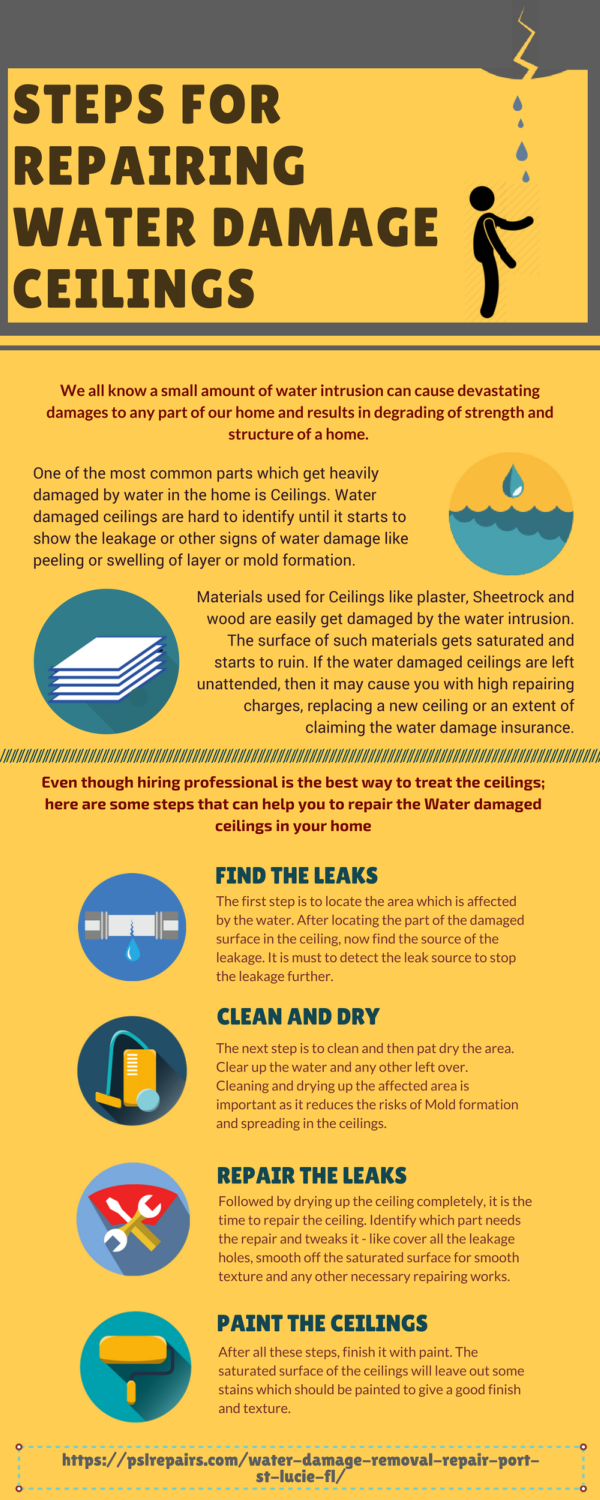
Initially, identify the source of the leakage and repair it-- whether it's a pipe, roof covering, or one more concern.
Next, eliminate any kind of damaged products. If the ceiling is discolored however structurally sound, you can clean it with a combination of water and mild detergent.
For more significant damage, you may require to change drywall or plaster. Cut out the afflicted area, mount brand-new product, and tape the seams.
Once whatever's completely dry, sand the surface, use primer, and repaint to match the remainder of your ceiling.
Constantly wear disaster cleanup and think about getting in touch with an expert if the damages is comprehensive.
How to stop Future Ceiling Water Damage?
To keep future water damages at bay, regularly inspect your roofing and pipes for leaks or use. Look for missing out on roof shingles, cracks, or indications of corrosion around pipes. If dehumidification detect any type of problems, repair them right away to stop larger problems down the line.
Make certain rain gutters are tidy and functioning effectively, directing water away from your home's structure. Inside, keep an eye on moisture levels; use dehumidifiers in wet locations to decrease dampness.
Take into consideration setting up water leakage detectors near possible issue spots for early alerts. Ultimately, preserve your home's outside paint and sealants to protect against water infiltration.
Verdict
Finally, dealing with ceiling water damage swiftly is important to prevent further issues. By recognizing the source of the leakage and fixing it, you can alleviate damage properly. Bear in mind to eliminate any afflicted products and repaint the surface area for a fresh appearance. Regular assessments and maintenance will certainly assist you stay clear of future issues. By staying positive, you'll not just secure your home however likewise guarantee a much healthier living atmosphere for you and your household.